The spreadsheet ceiling: why every SACCO outgrows Excel
What breaks first when a savings group scales past a few hundred members — reconciliation drift, loan maths, dividends, and the audit trail nobody can reconstruct.
TECH247 LIMITED15 Sept 20263 min read
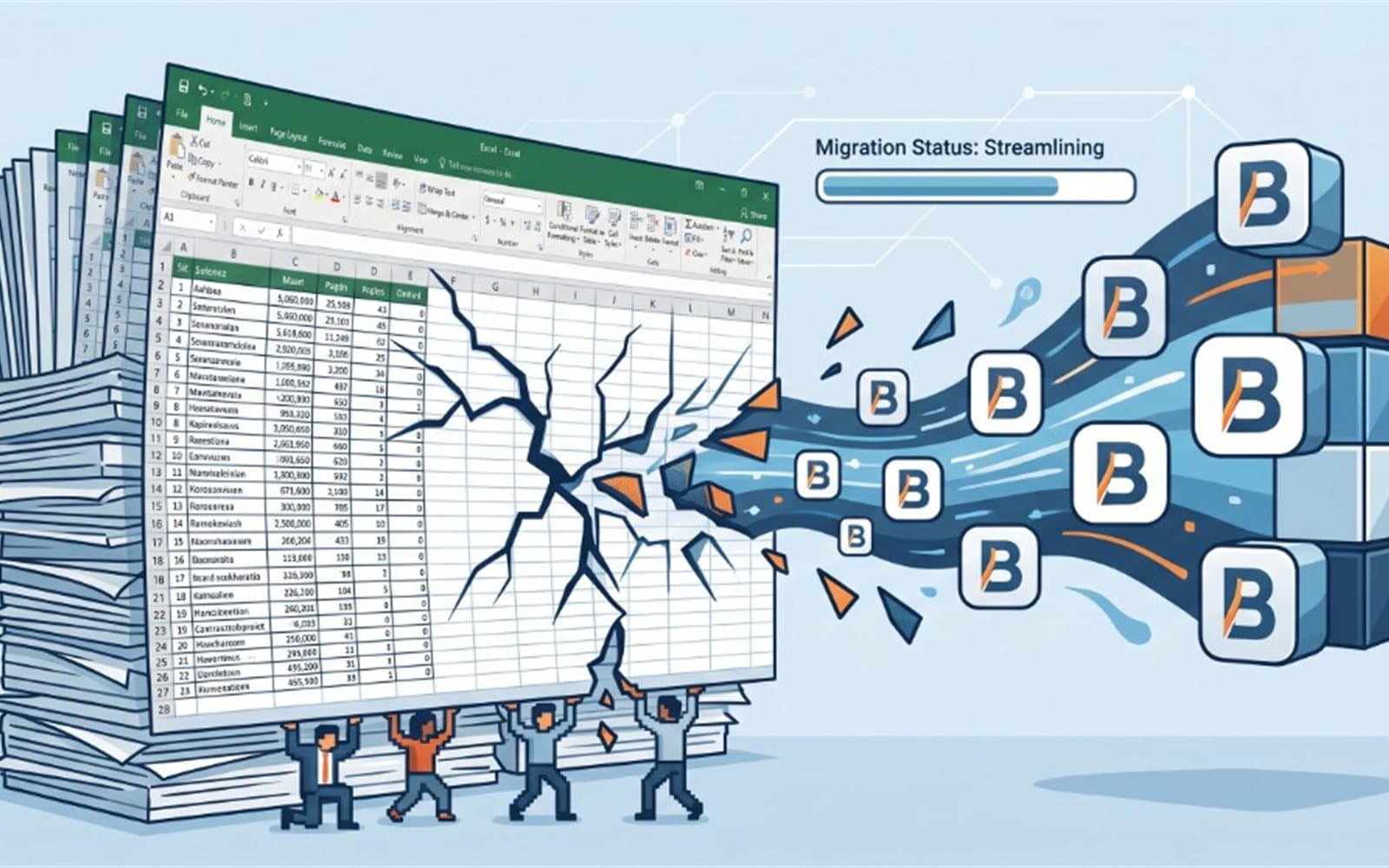
Almost every savings group and young SACCO starts on spreadsheets. They are cheap, everyone already has them, and you can change a column on a Saturday without asking a vendor. That is a good reason to start there. It is a bad reason to stay there once membership, loans, and shares no longer fit in one person’s head.
This is not a sermon against Excel. It is a map of the fracture points we see when a book that worked at eighty members is asked to work at eight hundred.
The hidden cost of human glue
At small scale the “system” is a person. One treasurer copies last week’s loan book into this week’s, another pastes share purchases into a second file, the cash journal lives in a third. Totals are compared by eye. When they do not match, someone “fixes” a cell.
That glue is invisible until it fails. A rescheduled loan updated in the loan sheet but not in the cash sheet. A share purchase entered twice. A withdrawal posted to the wrong member because two people share a similar name. None of these look like a system outage. They look like a quiet drift between books that used to agree.
The cost is not the Microsoft licence. It is the hours spent reconciling, the member who is told two different balances, and the board pack that cannot be reproduced from the same files a month later.
Where Excel fails first
Three jobs break before the rest.
Loan rescheduling. A member who was current, then was not, then was given a new due date, is not a row you can safely overwrite. You need the original schedule, the change, who approved it, and what interest does from that date. A spreadsheet stores the latest version. It rarely stores the path.
Declining-balance interest. Recalculating interest when a prepayment lands, or when a charge is waived, is arithmetic you can do for twenty loans. At a few hundred, with mixed products, the formula that “almost” matches the policy is how you quietly give away money — or charge a member who will notice.
Dividend on variable shareholding. If dividends follow time-weighted shares, last year’s closing-balance shortcut is wrong the moment people buy and transfer mid-year. Excel can compute it. It will not stop someone from using the shortcut under time pressure.
Audit trails and maker-checker
Regulators and external auditors do not ask “what is the balance today.” They ask who changed what, when, and with whose second pair of eyes. A shared workbook has a last-saved-by name, if you are lucky. It does not have an immutable lineage of a posting, a reversal, and the checker who released it.
Maker-checker is not bureaucracy for its own sake. It is how a teller and a supervisor share one ledger without one person being able to invent a withdrawal. Spreadsheets can imitate that with a second tab. They cannot enforce it.
A safe way off the sheet
You do not stop the counter on Monday to “go live.” You sanitise what you already have.
- Freeze a date. Pick a business day. Export or print the loan, savings, share, and cash positions as they stand. That pack is the source of truth for the cutover, not a moving file.
- Name the members once. One member number, one set of identifiers. Resolve duplicates before they become two accounts.
- Turn products into tables. Each loan and savings product gets terms, charges, and interest method written down — the way you actually run them, not the way the sheet’s formulas drifted.
- Load, then run parallel. Post a short period in both the sheet and the new ledger. Differences are expected. Hunt them while tellers still work the old way.
- Cut when the two books agree on the things that matter: balances, arrears, and share capital — not when a vendor’s slide says you should.
Apache Fineract is the engine we use for that ledger. BANKAYO stands it up, supports it, and changes products where the defaults are not how you work. The operator workspace is for the daily queue. Neither replaces the need to clean the sheet first.
If you are already past the ceiling — two files that no longer match, or an auditor asking for a trail you cannot print — tell us how the books actually run. We will say what can be loaded and what has to be fixed before anyone posts live.